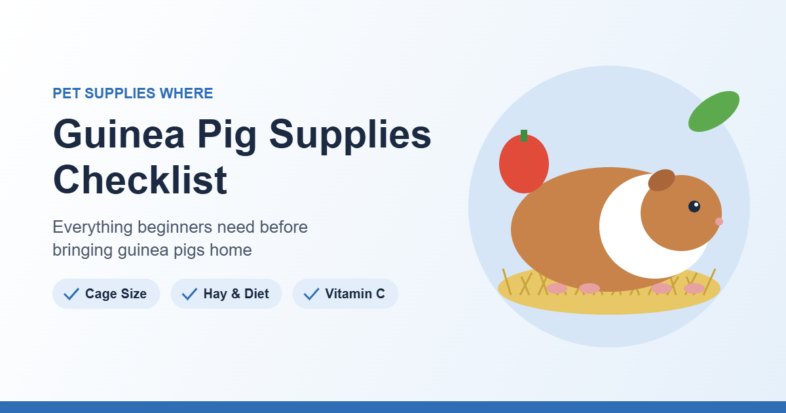
Guinea pigs are gentle, chatty, and fun to watch. They are also a bigger commitment than many people expect. They can live 5 to 8 years, they need fresh food every day, and they are happiest with a friend of their own kind.
Getting the right supplies before you bring them home makes the first weeks much easier for you and your guinea pigs. This checklist covers what you really need, what to skip, and the mistakes beginners make most often.
Affiliate Disclosure: This article contains affiliate links. As an Amazon Associate, I earn from qualifying purchases. I also earn from qualifying purchases through the Walmart Creator program and the eBay Partner Network. This does not affect the price you pay and helps support Pet Supplies Where. Read our full affiliate disclosure.
Quick answer: Guinea pigs need a large, flat cage (at least 7.5 square feet for a pair, more is better), soft paper or fleece bedding, unlimited timothy hay, a small daily portion of plain guinea pig pellets, fresh vegetables rich in vitamin C, a water bottle, one hideout per pig, safe chews, and nail clippers. Plan on keeping at least two, and find a vet who sees guinea pigs before you need one.
The Guinea Pig Supplies Checklist
Here is the full list at a glance. Each item is explained below.
| Supply | What to Look For | Why It Matters |
|---|---|---|
| Cage | 7.5+ sq ft of flat floor space for two, solid floor | Room to run, fewer fights, less stress |
| Bedding | Paper bedding or fleece liners | Soft on feet, absorbs urine, controls odor |
| Timothy hay | Fresh, green, sweet smelling, unlimited | Main food; keeps teeth and gut healthy |
| Pellets | Plain timothy-based guinea pig pellets | Adds vitamins and minerals |
| Fresh veggies | Bell pepper, leafy greens, herbs | Vitamin C, which guinea pigs cannot make |
| Water bottle | Leak-proof, 16 oz or larger | Clean water all day |
| Hideouts | One per guinea pig, open on two sides | Prey animals need a safe place to hide |
| Chews | Untreated wood, hay cubes | Teeth never stop growing |
| Nail clippers | Small animal or cat clippers | Overgrown nails curl and hurt feet |
| Bowl and hay rack | Heavy ceramic bowl, open hay holder | Keeps food clean and off the floor |
Cage Size: Bigger Than Most Pet Store Cages
This is the most common beginner mistake. Many cages sold as “guinea pig cages” are too small. Guinea pigs do not climb much. They run, jump for joy (called popcorning), and explore along the floor. So what matters is flat floor space, not height or extra levels.
A good starting point is at least 7.5 square feet for one or two guinea pigs, and about 10.5 square feet or more if you can fit it. That is roughly 30 by 36 inches at the low end and 30 by 50 inches or more for a roomier setup.
Look for:
- A solid floor. Wire floors can hurt their feet and cause sores.
- A deep plastic base to hold bedding in.
- Easy access from the top or a large door for cleaning.
- No exercise wheels or balls. They can injure a guinea pig’s back and feet.
The MidWest Deluxe Rabbit and Guinea Pig Cage (X-Large) at Walmart has about 47 by 24 inches of floor space, which meets the minimum for a pair. Many owners go bigger with C&C cages, which are built from wire grid panels and a plastic or coroplast base. You can expand them as needed. Compare C&C guinea pig cages on Amazon or new C&C cages on eBay.
Place the cage indoors in a room where people spend time, away from drafts, heaters, and direct sun. Guinea pigs are most comfortable around 65 to 75°F and can overheat quickly in hot weather.
Bedding
Good bedding is soft, absorbent, and low in dust. The two most popular choices are paper bedding and fleece liners.
Paper Bedding
Paper bedding is easy for beginners. You scoop out wet spots daily and replace it all about once a week. Vibrant Life Natural Paper Small Animal Bedding at Walmart is an affordable option.
Fleece Liners
Fleece liners are washable and save money over time. They need an absorbent layer underneath, and you will want at least two sets so one can be in the wash. See guinea pig fleece cage liners on Amazon.
What to Avoid
Skip cedar shavings and scented or aromatic pine. The oils can irritate the airways. Also avoid corn cob bedding, cat litter, and anything dusty.
Unlimited Timothy Hay
Hay should make up most of a guinea pig’s diet, and it should be available all day, every day. Chewing hay wears down their constantly growing teeth and keeps their digestive system moving. If the hay rack is empty, refill it.
Adult guinea pigs do best on grass hays like timothy, orchard grass, or meadow hay. Alfalfa hay is higher in calcium and protein. It is usually only recommended for young, pregnant, or nursing guinea pigs, so ask your vet before feeding it to an adult.
Good hay is green, smells fresh, and is not dusty or moldy. The Kaytee Timothy Hay (96 oz) at Walmart is a good size to start. Once you know how much your pigs eat, larger boxes save money. You can also compare timothy hay on Amazon.
Pellets
Pellets add vitamins and minerals, but they are a small part of the diet. A common guideline is about 1/8 cup per guinea pig per day. Your vet may adjust that based on weight.
Choose plain, timothy-based pellets made for guinea pigs. Avoid colorful mixes with seeds, nuts, dried fruit, or corn. Guinea pigs tend to pick out the treats and leave the healthy part. Do not feed rabbit pellets either, since they are not made for a guinea pig’s vitamin C needs.
Oxbow Simple Harvest Adult Guinea Pig Food at Walmart is a plain pellet. Serve pellets in a heavy ceramic bowl that will not tip over.
Vitamin C: The Most Important Thing to Know
Like people, guinea pigs cannot make their own vitamin C. They must get it from their food every day. Without enough, they can develop scurvy, which causes weakness, sore or swollen joints, a rough coat, poor appetite, and slow healing.
The best way to provide it is with fresh vegetables. Most guinea pigs do well with about one cup of veggies per pig per day. Good choices include:
- Bell peppers (red, yellow, or green). These are among the richest sources.
- Romaine and green or red leaf lettuce (not iceberg).
- Cilantro and parsley, in moderation.
- Small amounts of kale, which is high in calcium.
Fruit is a treat only, in small pieces. Introduce new foods slowly. Vitamin C drops in the water bottle are not a good substitute. The vitamin breaks down quickly, and it can change the taste so your guinea pig drinks less.
If your guinea pig seems stiff, sore, or stops eating, see a vet promptly. Ask your vet whether a vitamin C supplement makes sense for your pig.
Water Bottle
Guinea pigs need fresh water at all times. A hanging bottle keeps water clean and out of the bedding. Change the water daily and tap the spout to make sure it flows. Clean the bottle with a small brush every few days.
The Lixit Super Seal 16 oz Small Animal Water Bottle at Walmart is a sturdy choice. For two guinea pigs, many owners hang two bottles so there is always a backup.
Hideouts
Guinea pigs are prey animals. They feel safer when they have somewhere to hide. Give each guinea pig its own hideout so no one gets crowded out. Hideouts with two openings are best, so one pig cannot trap another inside.
The Kaytee Igloo Hideout (Large) at Walmart is easy to clean. Wooden houses, fleece cozies, and hay-stuffed tunnels work too.
Chew Toys and Enrichment
A guinea pig’s teeth grow for its whole life. Hay does most of the work, but chews add variety. Choose untreated wood sticks, apple sticks, hay cubes, or willow balls. Vibrant Life Wood Chew Sticks at Walmart are inexpensive.
For fun, add tunnels, cardboard boxes with holes cut out, and paper bags (handles removed) stuffed with hay. Rearranging things now and then keeps them curious. Daily floor time in a safe, guinea-pig-proofed area is great exercise.
Nail Care and Grooming
Guinea pig nails grow fast and can curl into the foot if ignored. Most need a trim every 3 to 4 weeks. Use small animal or cat nail clippers and trim only the tip, avoiding the pink quick. A towel wrap and a second person help. If you are nervous, ask your vet to show you the first time.
Compare small animal nail clippers on Amazon. Long-haired breeds also need regular brushing.
Why Guinea Pigs Do Best in Pairs
Guinea pigs are social herd animals. A single guinea pig can become lonely and stressed, even with lots of human attention. They talk to each other with squeaks and purrs and feel safer with a companion.
Good pairings include two females, two males that get along, or a neutered male with one or more females. Introduce new guinea pigs slowly, on neutral ground, with extra hideouts and hay. Many shelters and rescues have bonded pairs ready for adoption, which takes the guesswork out.
Vet Care
Not every vet treats guinea pigs. Find an exotic or small mammal vet near you before you bring your pets home, and schedule a checkup in the first few weeks.
Call your vet right away if you notice:
- Not eating or not pooping for more than a few hours
- Diarrhea or very small, dry droppings
- Labored breathing, sneezing, or discharge from the eyes or nose
- Drooling, weight loss, or trouble chewing
- Limping, swelling, or hair loss
A kitchen scale is one of the most useful supplies you can own. Weigh your guinea pigs weekly. A steady drop in weight is often the first sign that something is wrong.
Frequently Asked Questions
How big should a guinea pig cage be?
At least 7.5 square feet of flat floor space for one or two guinea pigs, and about 10.5 square feet or more if you can. Floor space matters more than height.
Can a guinea pig live alone?
They can, but they are much happier with another guinea pig. Most experts recommend keeping at least two.
How much hay does a guinea pig need?
Unlimited. Keep fresh grass hay available at all times. It should be the biggest part of their diet.
What vegetables give guinea pigs vitamin C?
Bell peppers are one of the best sources. Romaine, leaf lettuce, parsley, and cilantro also help. Aim for about one cup of veggies per guinea pig each day.
What bedding is safe for guinea pigs?
Paper bedding, fleece liners with an absorbent layer, and kiln-dried aspen shavings are common choices. Avoid cedar, aromatic pine, and dusty or scented bedding.
How often should I clean the cage?
Spot clean wet areas and droppings daily. Replace all the bedding and wipe down the base about once a week.
The Bottom Line
Start with a big, flat cage, soft bedding, unlimited timothy hay, a small amount of plain pellets, fresh vegetables for vitamin C, clean water, and one hideout per pig. Plan on at least two guinea pigs and find a vet who knows them. With the right setup from day one, guinea pigs are healthy, happy, and a lot of fun to keep.
What has worked best for your pets? Share your experience in the comments or join the conversation in our Pet Supplies Where Facebook group.
Related Guides
- Pet Supplies Worth Buying in Bulk (and What You Should Not Stockpile)
- Eco-Friendly Pet Products Worth Buying
- Traveling With Pets for the Holidays: A Safety and Packing Guide
- Best Pet Parrots for Beginners: Choosing the Right Bird for Your Home
- Benefits of Purchasing Pet Supplies Online: A Complete Guide