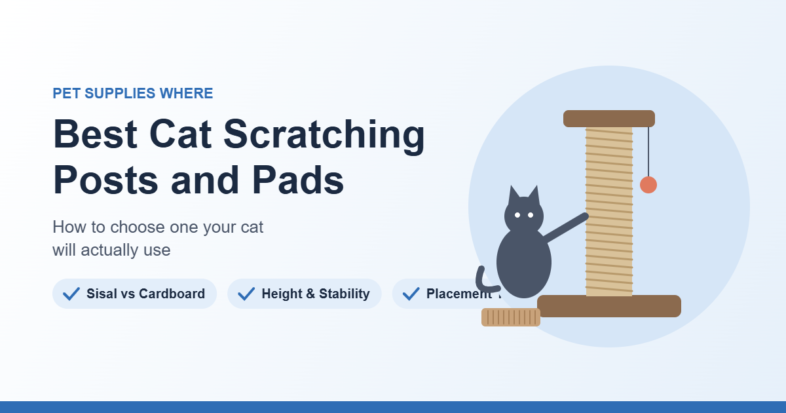
Cats scratch. It is not bad behavior and it is not something you can train out of them. Scratching sheds the old outer layer of the claws, stretches the back and shoulders, and leaves scent from glands in the paws. It also helps cats let off steam.
The goal is not to stop scratching. It is to give your cat something better to scratch than your couch. The good news is that most cats will happily switch once they have a post or pad that suits them, in the right spot.
Affiliate Disclosure: This article contains affiliate links. As an Amazon Associate, I earn from qualifying purchases. I also earn from qualifying purchases through the Walmart Creator program and the eBay Partner Network. This does not affect the price you pay and helps support Pet Supplies Where. Read our full affiliate disclosure.
Quick answer: Most cats do best with a heavy, sturdy sisal post tall enough for a full stretch (about 30 inches or more), plus one or two cardboard pads on the floor. Put them next to where your cat sleeps and next to the furniture they already scratch. Rub on catnip, reward with treats, and make the furniture less appealing for a few weeks while the new habit forms.
Vertical Posts vs Horizontal Pads
Cats have favorite scratching styles. Some reach up high and pull down. Others stretch out flat on the floor. Many like both. Watch where your cat scratches now. That tells you what to buy.
Tall Vertical Posts
If your cat goes after the arm or back of the sofa, door frames, or the side of the bed, they are a vertical scratcher. A good post lets them reach up, dig in, and pull with their whole body. A post that is too short or too wobbly gets ignored.
The Kitty City Premium Woven Sisal Scratching Post Perch at Walmart is an extra-tall sisal post with a perch on top. You can also compare tall sisal scratching posts on Amazon.
Horizontal and Angled Pads
If your cat scratches rugs, carpet edges, or the bottom of the couch, they likely prefer a flat or slightly angled surface. Cardboard pads are cheap, light, and many cats love them. They are also easy to place in several rooms.
The SmartyKat Super Scratcher+ double-wide cardboard pad and the Kitty City corrugated scratching pads 3-pack are both sold by Walmart and come with catnip. On Amazon, look at cardboard cat scratcher pads.
Cardboard vs Sisal vs Carpet
The material matters as much as the shape. Cats want something their claws can grab and shred a little.
| Material | Pros | Cons | Best for |
|---|---|---|---|
| Corrugated cardboard | Cheap, most cats like it, easy to replace | Wears out in weeks to months, leaves small bits on the floor | Floor and angled pads, trying out what your cat likes |
| Sisal rope | Tough and long-lasting, satisfying to pull on | Can unravel over time | Vertical posts and cat tree poles |
| Sisal fabric | Flat woven surface, very durable, claws do not snag in loops | Costs more | Tall posts and wall panels |
| Carpet | Soft, common on cat trees | Claws can catch in loops, may teach a cat that carpet and rugs are fine to scratch | Lounging platforms, not the main scratching surface |
| Wood or bark | Natural feel, outdoor-like texture | Harder to find, heavier | Cats who like scratching logs or wood trim |
For most homes, sisal for the tall post and cardboard for the floor pads is a winning mix.
Stability Is Everything
If a post tips or wobbles the first time your cat leans on it, many cats will not try again. This is the most common reason a new post goes unused.
Look for:
- A wide, heavy base, ideally at least about 16 inches across for a tall post
- A thick center pole, not a thin tube
- Solid bolts or screws rather than glue only
- Stability on your floor type (carpet can make light bases wobble more)
You can push on the top of the post yourself. If it rocks with a gentle shove, it will rock when a cat hangs on it. Some owners add weight to the base or set it against a wall or in a corner for extra support.
How Tall Should a Scratching Post Be?
Your cat should be able to stand on their back legs, stretch their front legs straight up, and still have post above their paws. For most adult cats that means about 30 inches or more. Large breeds like Maine Coons may need 36 inches or taller.
Kittens can start with shorter scratchers, but they grow fast. Buying a tall post from the start saves money later.
Cat Trees: Scratching Plus Climbing
A cat tree combines sisal-wrapped poles with perches, hideaways, and beds. Cats love being up high, so a tree can become a favorite spot to scratch, nap, and watch the room. Trees are also helpful in homes with more than one cat, since they add vertical space and give cats more room to share.
At Walmart, the Vibrant Life 5-Level Cat Tree Condo (44.5 inches) and the Alden Design 54.5-inch Double Condo Cat Tree both include sisal scratching posts. For multi-cat homes, the Vibrant Life 7-Level Cat Tree (65 inches) gives more room to spread out. You can also browse new cat trees on eBay.
When choosing a tree, check the same things as a post: a wide base, thick poles, and scratching surfaces tall enough for a real stretch. Tall trees should be anchored to the wall if the maker includes a wall strap.
Where to Put Scratching Posts
Placement often matters more than the product. A great post in a back room will lose to the couch in the living room every time.
- Near sleeping spots. Cats like to stretch and scratch right after they wake up.
- Next to the furniture they scratch now. Put the post directly in front of or beside the damaged spot.
- In the main living area. Scratching marks territory, so cats want to do it where the family spends time.
- Near entrances. Some cats scratch when people come home or when they see other animals outside.
One post per cat plus an extra pad or two around the home is a good target. Once your cat is reliably using a post, you can move it slowly, a few inches a day, to a spot you like better.
How to Get Your Cat to Use It
Some cats take to a new scratcher in minutes. Others need a little help. These steps work for most cats:
- Add catnip. Rub dried catnip into the surface or use a pad that comes with it. Roughly half to two thirds of adult cats react to catnip, and most young kittens do not. If yours does not, try silvervine. A small canister of SmartyKat Organic Catnip lasts a long time.
- Play near the post. Drag a wand toy up and around the post so your cat digs in while chasing it.
- Reward use. Give a treat or calm praise right after your cat scratches the post.
- Make the furniture less appealing. Cover favorite spots with a blanket, double-sided tape made for pets, or a plastic furniture guard for a few weeks.
- Never punish scratching. Yelling or spraying water makes cats anxious and can make scratching worse. Just move your cat gently to the post.
- Be patient. It can take a few weeks for the new habit to stick.
Keep Claws Trimmed
Regular nail trims cut down on damage while your cat learns to use the post. Most indoor cats need a trim every few weeks. Our guide on how to trim your cat’s nails safely walks through it step by step.
Soft nail caps that glue over the claws are another option for some cats. Ask your vet or groomer if they are a good fit and how to apply them correctly.
Never Declaw
Declawing is not a nail trim. It is surgery that removes the last bone of each toe. It can cause long-term pain, problems walking, and litter box avoidance, and it takes away a cat’s natural behavior. Major veterinary groups, including the American Association of Feline Practitioners, strongly oppose elective declawing, and it is banned in a number of states and cities. A good scratching post, regular trims, and some patience solve the problem without hurting your cat.
Frequently Asked Questions
Why does my cat ignore the new scratching post?
The most common reasons are a post that wobbles, a post that is too short, the wrong material, or a spot your cat does not visit. Try a heavier sisal post placed right next to the furniture they scratch, and add catnip.
How many scratching posts does my cat need?
At least one per cat, plus a pad or two in other rooms. More scratchers in the right places means less scratching on furniture.
When should I replace a scratching post?
Replace cardboard pads when they are shredded flat. Sisal posts can last years. Many cats prefer a well-worn post, so do not throw one out just because it looks rough. Replace it if it becomes unstable or the rope is falling apart.
Is it normal for my cat to scratch more when I come home?
Yes. Many cats scratch to show excitement or mark their space when people arrive. A pad near the front door gives them a good outlet.
My cat suddenly started scratching much more or stopped scratching. Should I worry?
Big changes in behavior can be a sign of stress, pain, or arthritis, especially in older cats. If the change is sudden or your cat seems uncomfortable, ask your vet.
The Bottom Line
Pick a heavy, tall sisal post for vertical scratching and add cardboard pads for floor scratching. Put them where your cat already sleeps and scratches, add catnip, and reward use. Keep claws trimmed and skip declawing. With the right setup, most cats leave the couch alone within a few weeks. For a full shopping list for a new cat, see our essential cat supplies checklist.
What has worked best for your pets? Share your experience in the comments or join the conversation in our Pet Supplies Where Facebook group.